



How to Turn Your Flat into a Feline Playground Without Losing Your Home’s Style

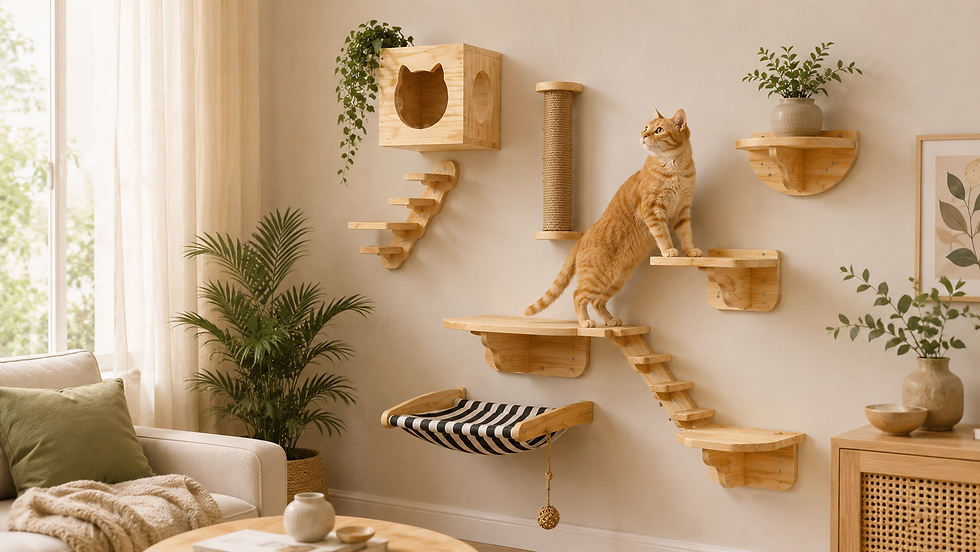
Turning your flat into a feline playground does not mean filling your living room with random toys, oversized scratching posts and pieces that look as if they came straight out of a chaotic cat theme park. The idea is much more strategic: to create a vertical, safe and stimulating environment where your cat can climb, observe, scratch, rest and explore without compromising the look and feel of your home.
For those living in a flat, this makes perfect sense. Cats are still animals with natural instincts to hunt, mark territory, observe their surroundings and seek shelter. When they live indoors, they need opportunities inside the home to express these natural behaviours. The AAFP, a North American association of feline veterinary specialists, together with the ISFM, highlights that a healthy environment for cats should include essential resources such as elevated areas, resting places, play spaces, scratching points and safe zones. According to these guidelines, access to elevated spaces increases a cat’s vertical territory and allows them to monitor their environment more confidently.
In practice, this means an empty wall can become a climbing route, a shelf can turn into an observation point, and a suspended hammock can become your cat’s new VIP lounge. It is environmental enrichment with a smart interior design twist. And let’s be honest: cats love height because, from above, they can watch everything like the CEO of the entire flat.
The Secret Is Making Use of Vertical Space
In small flats, one of the most common mistakes is thinking only about floor space. But cats experience the environment in three dimensions. They climb, jump, scale, hide and look for high places where they can rest safely. That is why using the walls is one of the most efficient ways to turn a flat into a feline playground without taking up valuable living space.
The AAFP/ISFM guidelines explain that elevated places help cats feel more in control of their environment and may reduce competition for resources in homes with more than one cat. This matters because cats value predictability and a sense of control over their territory. When everything is limited to the floor, the environment can feel smaller and less interesting to them.
A good structure may include shelves at different heights, steps, bridges, niches, vertical scratching posts and hammocks. However, the key point is to create a connection between the pieces. A single isolated shelf may look nice in a photo, but your cat needs to understand the route. Ideally, the layout should include an accessible starting point, intermediate supports and a rewarding final destination, such as a cat house, suspended bed or a spot near the window.
Environmental Enrichment Is Not a Luxury — It Is Wellbeing
Environmental enrichment is a concept widely used by veterinarians and animal behaviour specialists. It means adapting the environment to encourage natural behaviours, reduce boredom and support overall wellbeing. Cornell Feline Health Center, in the United States, explains that suitable toys and stimuli help cats practise behaviours such as chasing, jumping and solving small challenges. These elements may also help prevent issues linked to lack of stimulation, such as obesity, destructive scratching and inappropriate elimination.
The AAFP also highlights that veterinary teams should guide cat owners on the importance of environmental enrichment, as lack of stimulation may be associated with problems such as obesity, aggression, excessive grooming, compulsive disorders and stress-related illnesses.
In other words, turning your flat into a feline playground is not about spoiling your cat too much. It is about creating an environment that actually respects who your cat is. A cat does not only need food, water and a litter tray. They also need territory, choice, activity, rest and safety.
A Feline Playground Needs Different Functions
A good feline playground is not just for “play”. It should meet several needs at the same time. Cats Protection, one of the leading feline welfare organisations in the United Kingdom, lists important resources for happy cats, including food bowls, water, litter trays, scratching posts, hiding places, elevated perches, toys and beds.
So, when planning the space, think about four main functions:
Climbing: use shelves, steps, bridges and platforms to create a vertical route.
Scratching: include sturdy scratching areas, ideally in places where your cat already likes to pass through or rest.
Observing: position a high point near a safe window so your cat can watch what is happening outside.
Resting: add hammocks, suspended beds, cosy niches or comfortable hideaways.
This mix is what makes the environment truly functional. There is no point having a beautiful shelf if your cat has nowhere to scratch. Likewise, there is no point in having an amazing scratching post if it is hidden away in a dull corner of the home. Cats are demanding users: if the experience is not good, they simply ignore the product. Feline UX is absolutely real.
Scratching Is Part of Cat Communication
Many people see scratching as “bad behaviour”, but that interpretation is unfair. For cats, scratching is a way to stretch the body, maintain their claws and mark territory. VCA Animal Hospitals, a North American veterinary network, explains that when cats scratch surfaces, they deposit pheromones from their paws, helping to reinforce their sense of security within the environment.
The AAHA, a North American association of animal hospitals, recommends offering scratching posts with different materials, shapes and orientations, including both vertical and horizontal options. The organisation also reinforces the importance of stability: if the scratching post wobbles or falls over, the cat may become frightened and avoid using it again.
Within a feline playground, the scratching area should not be treated as an afterthought. It is part of the emotional architecture of the space. A sisal post on the wall, a wooden scratching panel or a scratcher integrated into the climbing route can help your cat burn energy while also protecting furniture, sofas and curtains.
Safety Comes Before Aesthetics
A beautiful feline playground only works if it is secure. That is the golden rule. Shelves, niches and bridges need reinforced fixing, suitable wall plugs, resistant screws and materials that can safely support your cat’s weight. The AAFP/ISFM recommends that perches and shelves should be wide and long enough for cats to stretch out comfortably.
It is also important to consider your cat’s individual profile. A young and active cat may love higher and more challenging routes. An older cat, an overweight cat or a less confident cat may need closer steps, lower heights and wider supports. Before allowing your cat to use the structure freely, test the stability of every piece. If anything wobbles, creaks or feels fragile, adjust it first. Safety is not a detail; it is the baseline.
A Beautiful and Functional Flat: Yes, You Can Have Both
One of the most interesting points from the carousel is the clean aesthetic: light wood, neutral tones, plants, pale walls and pieces with a lightweight design. This style works very well because it integrates the feline playground into the décor rather than making the space look improvised.
Choosing light wood, neutral-coloured hammocks and shelves with simple lines helps create a more premium look. The vertical layout also frees up floor space and makes use of walls that would otherwise remain empty. The result is simple: your cat gains territory, and your home gains personality.
The trend of enriching indoor environments for cats has also appeared in recent animal behaviour and wellbeing content. A report by The Guardian highlighted that indoor cats may experience boredom when they do not receive enough stimulation. Experts consulted in the piece suggested resources such as window perches, cat towers, interactive toys, puzzle feeders and vertical structures to make the routine more active.
At the same time, European veterinary publications have drawn attention to an important point: keeping cats indoors should not automatically be seen as a guarantee of wellbeing. According to Vet Times, researchers warn that indoor living can protect cats from external risks, but it must also come with real opportunities for choice, exploration and positive experiences.
In other words: a safe flat is great. A safe, stimulating and vertical flat is a whole new level of care.
Quick Checklist to Turn Your Flat into a Feline Playground
Before setting up the space, review the following:
Is there a clear climbing route?
Are there intermediate supports between heights?
Does your cat have somewhere to scratch?
Is there a high observation point?
Is there a comfortable resting area?
Are all pieces securely fixed?
Can the material support your cat’s weight?
Does the look match your home décor?
Turning your flat into a feline playground is about creating a mini kingdom where your cat can live with more freedom, even indoors. With shelves, scratching posts, hammocks, niches and safe installation, any wall can become a space for adventure, rest and observation. And the best part: you do not have to give up a beautiful, organised home with that “Pinterest-worthy, but with a real cat” vibe.
Ready to Create Your Cat’s Own Vertical Kingdom?
Your flat has more potential than you think — and your cat knows it. With the PurrLoft™ Wall-Mounted Cat Climbing Set, you can turn an empty wall into a stylish space for climbing, jumping, lounging and exploring, without taking over your floor space.
Give your cat more movement, more comfort and their very own elevated retreat.
Discover the PurrLoft™ Wall-Mounted Cat Climbing Set today and transform your home into a feline playground your cat will love.



Comments